Showing posts with label bedside manner. Show all posts

Wednesday, June 18, 2008

Empath


I received an email from a reader who plans on a career in surgery; she asked about empathy, or lack thereof, and how it affects a surgeon. It's an interesting question, and it plays in both directions. Other than situational intensity, I think it's the same for all docs.

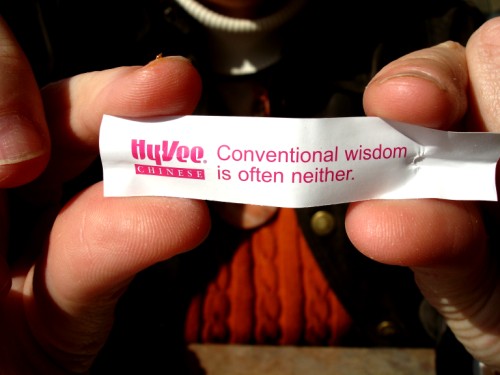
Conventional wisdom has it that doctors must retain "professional distance" from their patients. To allow oneself to cross the line (where ever it might lie) and become too close (what ever that might mean) is to risk letting one's judgment become clouded when difficult decisions must be made. The argument is not without merit; to the extent that physicians must be dispassionate in their thought-process, I fully agree. But I think the calculations that are made necessarily include some knowledge of who the patient is. And, as I've said more than once, I think it's part of a doctor's job to instill confidence and trust in her/his patients, because I think it helps them to deal with their illness and recovery. In part, that requires the ability, at some level, to see inside their heads: empathy, in other words. Looked at that way, it's part of the job.

At minimum, I'd say, it ought to be possible even for the most aloof doctor to imagine how he or she would like his or her, say, parents to be treated by a phellow physician. For those who lack it naturally, empathy, one would think, ought to be acquirable, teachable, emphasized as a needed tool in a doctor's bag of tricks. Relating to patients from a place lower than a high horse; treating with respect and kindness; these are as necessary, in my view, as any other skill a doctor needs. It comes from empathy. If you don't have it, fake it.

The flip-side is the question of physicians' personal well-being: if you empathize with all your patients, do you risk bearing too much of a burden? Does it lead to burnout? Is that "professional distance" necessary for one's own survival -- forget about the patients.' As I see it, that is in fact the higher concern. Paradoxically, empathy needs pairing with the ability to compartmentalize, to relate one-on-one and leave it behind when you walk away. As if that's actually possible.

Somewhere above the middle on the list of factors in my own burnout is the sharing of pain with my patients. As my practice grew to include more and more patients with breast cancer, as one very large example, so did the proportion of patients that came to me with it every day. And as the years went by the average age seemed steadily to lower. More and more frequent it was that I found myself in my office, face to face with a young woman and her family, little kids, my words bouncing off that terrified mask, ineffectual, trying to balance hope and honesty. Each one was a little more painful than the one before; each time my chest felt tighter, my desire grew stronger to tell my nurse never to schedule another such patient. Worse, I had to fight harder and harder to resist the urge -- hollering from within my own burning brain -- to paint a rosier picture than the situation called for. Just to avoid the tears and the terror. (If empathy can be learned, I'm not sure it can be unlearned.) I think I never yielded. But the whispered temptation was among the voices telling me it was time...

It's easy to sympathize with doctors -- and stereotypically, anyway, it's more likely to be surgeons -- who purposefully remain above it, who relate to their patients in a perfectly matter-of-fact manner, or worse. And yet looking back on my career it's the times I've been thanked for kindness, have been told the time I took was appreciated, of which I'm most proud. Beyond telling myself I was good with the mechanics -- which I do, rightly or not -- it's the sense that I cared deeply that I think made me who I was as a surgeon. And without doubt, it's also a large part of what shortened my career. Had I cared less I might well still be at it.

So here's the answer I should have given the young woman: I haven't a clue!

Friday, February 29, 2008

Don't Worry, Heal Happy


On a pass through Kevin MD's website a while ago, I saw a reference to an article which reported a study on anger and healing. The report, at BBC online, said, in part:

"The Brain Behavior and Immunity study indicates stress has a major impact on the body's ability to repair itself. Nearly 100 participants were asked to rate how well they could control their temper, and the speed at which they recovered from a blister was monitored. Hotheads were more than four times likely to take more than four days to heal than mild-mannered counterparts.... The team at Ohio State University gave participants blisters on one of their arms and then monitored how the wound healed over the course of eight days. They were asked to fill in a questionnaire which looked at how anger was expressed - whether externally, by shouting at others, for instance, or internally, when one rages insides but keeps a cool exterior."

At the end of the article, there was this:

"Steve Bloom, professor of metabolic medicine at Imperial College, London, said stress was now increasingly recognized as a factor in recovery rates. "Your body prioritises and sorts one thing out at a time, so if you are stressed - angry in this case - your body works through that before it gets on with the process of healing. We've yet to see a study that categorically proves having an attentive, calming presence by your bedside actually speeds up your recovery, but the evidence is certainly pointing that way." (My emphasis.)"

Studies like these (judging emotion) are a little squishy, and one might well challenge the methodology, not to mention that "prioritises" deduction. But it sorta kinda rings true, off the top of my head.
Naturally, I extrapolated. I think there's an important message; or at least there might be.

I often heard from nurses on the surgical floor that my patients were calm and positive when they arrived, and that they seemed to do better than those of other surgeons. (No, I can't say it wasn't just a way to ingratiate -- for all I know, they said it to every surgeon.) Of course, I loved hearing it; it went to a very specific aim and belief of mine. If their assessment was true -- and this is me saying it was -- it validates an overt effort on my part to achieve a sense of comfort and confidence, a positive attitude toward recovery. I've always thought it makes a difference. (I recognize the article in question doesn't draw an outright conclusion. "Pointing that way," is what it says.) (Nor, let it be said, am I talking about "cure." Just recovery from surgery.)

The antithesis is the doctor -- any type, really, but in this context a surgeon -- who makes hospital rounds, perfunctorily pokes and prods and leaves with little or no meaningful communication, ignoring obvious concerns. Having watched such behavior while visiting hospitalized friends and relatives, I can say it leaves the patient and family angry and frustrated, which, this info would suggest, is actually medically counterproductive. Doctors can't, of course, remain a "calming presence by the bedside" for more than a very few minutes at a time; but we can listen, explain, even sit down and look the patient in the eye. Not only is it the human and natural way to behave, if it produces the opposite of anger, it looks like it might actually be medicinal! Even grumpy docs give antibiotics when needed. In the same spirit, maybe they'll work to provide a decent dose of needed nice.

Friday, June 29, 2007

Shoe/Foot (other)


I wish I'd had a tape-recorder. I'd have gotten it all and sent a copy to the doctors and the nurses. If I were nasty, I'd have sent it to the hospital administrator...

Having had a number of people close to me in the hospital lately, I've spent plenty of time at the bedside. It leads me to conclude that if every doctor and nurse did the same, without letting on that they were "medical," they'd change their behavior overnight. I was a visitor in a hospital just this morning, in a two person room. The roommate was a nice lady, fresh from surgical repair of a broken leg. A few months ago, she'd had breast cancer. A doctor came to see her: thin, dressed in a crispy thigh-length white coat, dark slacks, academically correct glasses. Medical guy, clearly.

"Hello," he said. "How are you feeling?"
"Hi. I'm ok, I ...."
"I saw your scan. It doesn't show the cancer. Does it hurt when I press here on your liver?"
"That doesn't hurt, but..."
"Are you feeling better than yesterday? Does your liver hurt when I push here?"
"A little, maybe..."
"OK." Exits.

Seriously. That was the exact interaction.

Meanwhile, the lady had called the nurse because her drain had come apart, leaking into her bed. As the nurse checked it out, she noticed what was evidently more than the usual amount of swelling in the lady's leg. "Oh, this is pretty swollen. Is it bigger than yesterday?"
"I don't know. I guess so, looking at it..."
"I'm going to call your doctor." Exits. Returns with another nurse in a couple of minutes. "Does this look swollen to you?"
"Yes, and it feels tight."

Someone sticks her head in the door. "You page Dr Ortho?"
"Yes, I'll get it." Exits, returns in a couple of minutes. "He said not to call him urgently, it scared him. He's coming." Rustling around, passing back and forth in front of me and the person I'm visiting, urgent, but no eye contact our way.

Dr. Ortho shows up in about five minutes. "Let's have a look... You have some bleeding into the muscle. It happens. We cut apart the muscle to fix the bone. And you're on blood thinners. You need to be on them, but when they cause problems, we have to stop them. We'll take out the drain. Try to lie right on the leg. The pressure will help."
"Thank you, Doctor."
"You're welcome. Goodbye."

Nurses return to patient, and talk while changing the bandages: "He acted like it wasn't important, like I didn't need to call him. I think it was important."
"So do I. It's a problem."
"Well he sure acted like it isn't."
"It is."

No point in listing the issues: I assume they're obvious, and that if the people were to see or hear a playback, they'd feel bad. Nor did I say anything, because I wasn't part of it. Last time I was, I did.

When my dad was admitted for what turns out to have been his final hospitalization a couple of years ago, it was first to a room on the medical floor. (I arrived a few hours after admission, to find him working quite hard to breathe, and asked the nurse how long it'd been since his oxygen level had been checked. "It was fine when he came in, but I'll check again.... 75%. That can't be right...." But that's another story, maybe for another day.) The point was that while we were awaiting the arrival of his physician, some attending came in leading an audience of admirers, consisting of a resident, an intern, and a student. Never acknowledging my mother, who was sitting by my dad with her fear and concern as obvious as if she were on fire, the attending told my dad he was going to listen to his lungs, and did so. No introduction, no preamble. Without another word to my dad, he asked his charges to do the same, which they did, wordlessly, after which he began to talk to them about it as they exited the room. The student turned and (uncomfortable, I'd like to think, at the absence of humanity) said "thank you" as he left. "I'll be right back," I said to my folks, launching from my chair with the fury of righteous indignation thrusting me like a bottle rocket.

"Excuse me, I'm Dr Schwab, and those were my parents," I intruded into the gaggle outside the room, ignoring entirely the attending and looking only at the student. "I've been in practice over twenty-five years, and I've never seen a worse example of how to behave in front of patients and family. I hope you took notes, because it's really important, more important than whatever you heard in my dad's chest. No one introduced himself, no one explained why they were there, what was going on. If you couldn't tell my mother was scared to death, you're all blind. Yet no one acknowledged her at all. No one even turned her way. She didn't exist to those people. That was the most egregious behavior I've ever seen.... and I'm a damn SURGEON!! Maybe you can learn from this -- (still looking at the student and paying no attention to the doctors) -- I'm guessing the rest couldn't care less." As I walked back into the room, I noticed the eyes of a couple of nearby docs aimed in my direction. I don't know what they were thinking.

Docs, nurses, students: when someone you know is in a hospital where you aren't known, make it a point to visit. Watch and listen. It'll be better for you than a dozen sensitivity classes. Way better. Acknowledgment, explanations. Listening. In that first case, about twenty extra words from the docs, and twenty fewer from those nurses would have made all the difference. For all of 'em: empathy. It's all about empathy. The absence is about 90% of what's wrong with medical care. And you know what? I'll say it. I'll take a chance on sounding like a pain in the ass: I know I was never perfect. I don't have the fastest hands nor the deepest knowledge on the planet; I've made mistakes in technique and in judgment. But I always had empathy. I treated my patients as I'd have wanted my parents to have been treated. I never acted like any of those idiots. (Not to patients, anyway.) And I'm still pissed.

Sampler

Moving this post to the head of the list, I present a recently expanded sampling of what this blog has been about. Occasional rant aside, i...