[Credit to Judy for suggesting this picture.]
I think it might be about 8,000. Or is it 12,000? Anyway, somewhere I've seen the number of new words people learn in medical school, and whatever the correct amount, it's impressive. Here and there in this blog, I've mentioned some words I really enjoy just for the saying: bezoar, inspissated. How about radiculopathy? (Sounds like a word that could be applied to most politicians, whether you pronounce it "rih-diculo... or "raa-diculo...) Neovascularization. Tachyarrythmia. Pancreaticoduodenectomy. Intussusception. Bezoar.
Bee-zore. Say it like the taunting "air-ball" at a basketball game. (Digression: It's been shown that at every venue, whenever the chant is chunt, it's always in the same pitch, the same notes on the scale. F - D, matter of fact.)
OK. The point I want to make is that in addition to the neo-vocabulary we learn, there is also a more esoteric lexicon: words or terms that bubbled into the vernacular and have become universally understood, at least within certain sub-cultures: gomer; O-sign; Q-sign; flail. Let me tell you one of my favorites. It has it all: nice sound, excellent meaning, and, in my case, a connection to one of my favorite people. The word is
NOOGER.
In my book, I described learning how to dissect through distorted, inflamed, difficult anatomy. I called the method "delicate brutality." (Too late, it occurs to me that that would have been a great title for the book.) Central to the technique is the ability to nooger; namely, to ootz a finger into a sticky place and wiggle it, pinch it, insinuate it until you find a way through without poking a hole into something important. Noogering can be done with other blunt instruments: a sucker, a round-ended clamp, closed scissors, often along with the finger. Indeed it requires a combination of delicacy and brutality, plus some sort of either learned or innate (or both) sense of touch; of tissue turgor (there's another good word: turgor, turgid) and confidence of anatomy. If you can't tell where a thing is, you need to be fairly confident of where it isn't.
Not all surgeons need to nooger. Orthopods and neurosurgeons don't. Bone isn't noogerable, and brain, well, God help us... But a non-noogerescent general surgeon is bound for trouble. Important as it is, I can't think, exactly, how I learned it; or how properly to teach it. But I did, both. In a situation requiring one to nooger -- precarious as it usually is -- I'd rather do it myself than try to tell someone else how.
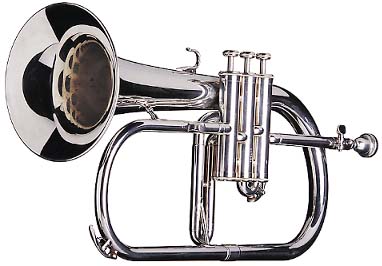
Among my favorite characters from training was the chief cardiac resident, a gangly, good-humored, soft-spoken, slow-walking but fast-thinking southern boy, Joe (full name: Joe) Utley. (The picture is from much later, in his evidently post-gangly years. Like mine.) In stark contrast to the other men populating that department -- who were volatile, egomaniacal, bad surgeons, crazy, nasty, or pretty much any combination of those characteristics -- Joe was laid-back, engaging, and highly talented. He told dumb jokes, quoted lines from movies, played the fluglehorn while wearing a sombrero, and treated me -- his over-worked intern -- with respect and caring (although, it could be argued, having an intern and his girlfriend [now wife] over and subjecting them to the horn and the hat was anything but respectful). I loved the guy. (Joe died a couple of years ago. I sent a copy of my book, in which he played a prominent role, to his wife; she wrote back that she knew he'd have loved it, and she could imagine him laughing out loud while reading it. That made me feel good.)
In hooking a person up to the heart-lung machine, it's necessary to control blood returning to the heart via the venae cavae. That requires (did then, anyway) slinging the veins with ties; to do so necessitates dissecting within the pericardium, behind those delicate structures, completely encircling them. Joe had a favorite instrument for the job, a very large clamp with a curved and bluntly-rounded tip. This he referred to as a "Giant Noogerer." Open heart surgery has a certain drama, and, in those relatively early days on the time-line, tension compounded by lengthiness. But as an intern on the service, because there was always lots to do, stretching into sleeplessness, time in the cardiac room was -- depending on who was in charge -- rarely pleasant. With no opportunity to do anything but stand there and answer questions, the hours dragged me down, while pushing the day's work further into the night. Except with Joe. I found myself looking forward each time, as the moment approached, to hearing him ask for the tool. "Giant noogerer," he'd say, hand out, and it always arrived with no need for clarification. With his gentle accent, it sounded like "jahnt nurgrer." I wanted to link here to a picture of one. But I have no idea what the real name is.