An article in today's NY Times got me reminiscing about operating on old folks. While it's true there is inherently increased surgical risk in their care, my list of favorite patients is heavily populated with the elderly.
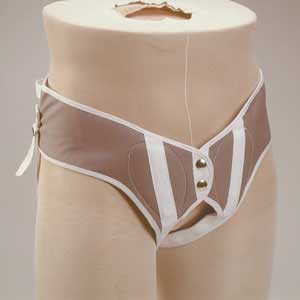
Like the ninety-six year old who lived with a very cumbersome hernia because he'd been told repairing it would be too risky. He had some friends over for a truss-burning party after I fixed it under local anesthesia. Or the WWII vet, rejected by other surgeons for his age and (only slightly) less than perfect heart, who told me I'd replaced Douglas MacArthur as his hero after I cured his debilitating reflux esophagitis. The many many older women who took their breast cancer in stride; the sturdy lady who fought tooth and nail, literally walked out on me, when I first told her she needed a colostomy but who finally acceded and insisted on seeing me bi-annually forever afterwards, bringing treats from her garden every time.
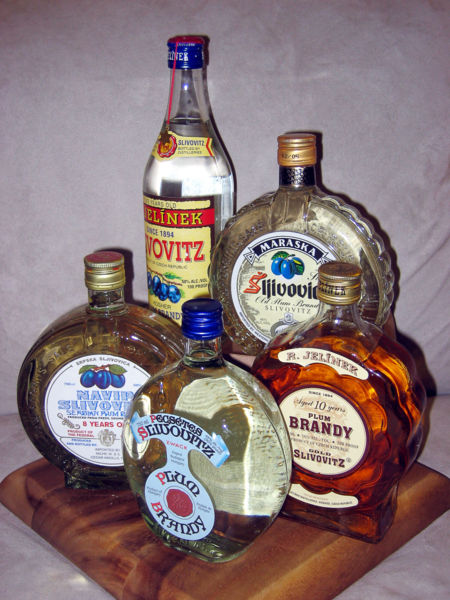
The oldest I ever operated on was a Russian immigrant from a town in the Ural Mountains where they live half way to forever. He was 102, which was lower than his temperature, caused by a gallstone stuck in his bile duct. His family assured me he was sharp as saber and strong as slivovitz. Two weeks later, he was back working his garden.
It was always my impression that older people were more matter-of-fact about their illnesses, and I found it almost universally true that they were less troubled with post-operative pain. Maybe it was physiological; maybe because they were more sensitive to narcotics. But I always thought it was simply because they'd made it through the better part of a hard life and pain just wasn't that big of a deal any more.
For an older person, the default mode was trust (the "sturdy" lady excepted. Sort of.) They listened when I talked. "Do what you think is best, Doctor," they said, which was like flopping into a comfy chair, after a day of walking on nails. It's impossible to care for the gray-haired and not think of grandparents, not to relax a little, to feel respect.
Okay, in the intensive care unit, not so much. Called there to consult, finding an ancient-looking person, tubes in natural and unnatural orifices, knowing survival odds are in inverse relation to those tubes, one is faced with often impossible questions having unknowable answers. To do what is reasonable; certainly no less, but hopefully no more. And humane. But that's another matter, with not just immediate but global implications (health care costs!). I was talking about the sort of relationship that begins in the office, or maybe a regular hospital bed. Relaxed. Time to get to know each other.
The NYT article points out some ways in which the geriatric population differs from the younger. (It also makes the very good point that whereas all med students do time in pediatrics, obstetrics, etc, there's no requirement for geriatrics. Older folks aren't just wrinkly.) It's certainly true in terms of length of recovery time, healing issues, complications from accompanying disease.
I wish there were objective ways to measure risk, to predict outcomes. Absent that, I always found a couple of reliable -- if unscientific -- predictors: people do like they look. An eighty year old who looks fifty will recover like a fifty year old; a fifty year old who looks eighty will recover like eighty. And, no matter what age, anyone who walks a mile or two every day will do just fine.