Showing posts with label medical quality assurance. Show all posts

Tuesday, April 08, 2008

Numbers Game


In the military they graded you on everything, and you graded those of rank below yours. Drafted out of training at the end of my internship, before flying off to Vietnam I headed to San Antonio to learn what makes a Flight Surgeon (after a brief stop in Bellingham Washington to get married; the timing, one could argue, was poor, if optimistic, but it seems to have worked out.) During the sojourn at Brooks AFB, in addition to sinus blocks, decompression chambers, water-survival, altitude sickness, G-suits, and the self-injection of antidotes to toxic gas, we were taught the way the evaluation game was played. Specifically, we were instructed what not to do.

Careers can be unmade by those forms. Listing all manner of attributes, to be rated in numbers running from 'one' (for performance worse than would be done by a cold corpse) to 'ten' (ostensibly for attributes seen only in the divinely touched, but in practice doled out like drinks at the Officers' Club), the forms needed filling annually. For officers, there were OERs, for "Officer Efficiency Report (or was it "Rating?")" For enlisted personnel, it was A-something-something, for Airman something something. As draftee docs, none planning on a military career, we were made to understand it was not our place to screw up anyone's future; most especially that of a lifer. The default grade, in other words, was 10. Or, in extreme circumstances, 9.

I had no problem with it. In fact, I had more difficulty with the idea that I was about to be someone's boss. (In reality, of course, I wasn't. Anyone who's been in the military knows a good NCO runs the show in any given shop. I found mine, and hung on for dear life.) The ultimate example of the "shit runs downhill" phenomenon, internship hardly qualifies as ego-supportive. I'd never been in the position of judging anyone in any impactful way (plenty of experience in being judged), and I had no desire to start at that lowly point in my career. Tens it was. On the other hand, I got a nine once, and the hospital commander was concerned enough to call me in to tell me about it.

With a look of fatherly disappointment on his face, the Colonel told me that on my OER (this was while still in Vietnam) I'd gotten -- having otherwise run the table with tens -- a nine in the matter of "military deportment." Which translates into saluting a little less crisply than the manual describes, and maybe having a little more hair touching my ears than specified. No matter that by all measures medical I was in the perfect category, and no matter that a nine was, theoretically, equivalent to walking on water but maybe getting your ankles a little wet. Damn near perfect, so you'd think. But the concern was that, were I to choose a career in military medicine, such a blight could besmirch it, and I should deign to develop my demeanor, amplify my attitude. Shine my jungle combat boots, presumably. Kiss me some colonel ass; administer a high colonelic.

Other than the telling of an amusing story, my point here is that measurement of performance is difficult and distorted; perverse, even. This, it turns out, applies not only to those charged with protecting the life of our nation, but to those protecting the lives of patients. In the military we had hospital inspections regularly, by several inspectors general from several command levels. Every month or so, it seemed, there were people wandering around the facility with clipboards. Our preparation? Buffing the books, polishing the paperwork. It's not that much different in civilian medical life. What's looked at, because it's easiest, are protocols and procedures, bound in binders. Are the boxes checked: at what time was the antibiotic noted as given in relation to the surgical incision? What forms were filled before the patient went to sleep?

I think there's not the same pressure in civilian life, as there was in the military, to bend toward favorable reviews. The opposite, in fact, is becoming the way: guilt is presumed over innocence; punishment preferred over finding and correcting the process that led to an error. Accreditators want to see a few scalps hanging on a few hooks.

Near the end of my military service, having been sent to Vietnam after being told I'd not be; having found, at first, that I wasn't needed when I got there (not for a while, anyway); having endured the broken promise of first choice assignment on returning home, and having witnessed the randomness with which doctors were matched to their skills, I got a call from a high-ranking officer who tried to convince me to stay in. "Yer thuh kahnda ofzer whur lookn fer, See-id." Really? With a nine on my record? But I wonder: given the difference between their kind of evaluation and the ones crawling up our legs in the civilian world: might I have ended up happier had I stayed?

Friday, November 23, 2007

Off Center


The latest in the never-ending quest to define quality medical care is the designation of "Centers of Excellence." It's a grand goal. In theory, it sounds like just the thing to help consumers find their way to the best of care. Going to a COE (as folks are wont to abbreviate them) ought to give one a great deal of confidence; and from what I know there's truth to the idea. If you go to a COE, it's not likely the care you receive will completely totally suck.

I'm not naïve; nor, I'm pretty sure, are you. It ought to surprise no one that the criteria for qualifying as a COE are generally imperfect, sometimes political, and not always central to uncovering what is, in fact, excellent care. I say this as a person no longer directly affected by such things, one who has worked in some pretty excellent places and who has delivered (yes, yes) occasional aliquots of excellent care; but whose time in practice pre-dated being in a position to be so designated, or not. So I carry no grudges, bear no wounds, have no need for excuses. An observer only, I'm still working enough to see, from within, the workings of the process; enough, I think, to make comments based on experience. Thumbnail version: hypo-impressed.

For one thing, like a lot of other awards -- or like the boxing world last time I paid any attention -- there are lots of agencies and organizations handing out hardware; not only different ones for different types of care, but even within a given field. (And, of course, they charge for it. Some more than others.) Can't get one? Get another. Criteria? Variable. In addition -- as is true universally for such things -- it boils down, to a very large extent, to the filling of various boxes, the ticking off of a checklist, which may or may not reveal what really goes on in the delivery of care. Evaluators show up with a list of demands, such as having protocols printed out and available for review, folders with the credentials of participants, plans for gathering data. All of which can be assessed with feet up, smoking a cigar, sipping a nice port. (Nothing changes: when I was in the military our facility was evaluated regularly by any number of inspectors general from any number of command levels. It was always and only about buffing up the paperwork, period.) The depth of penetration, as it were, can depend on the individual with the clipboard, what kind of day they had, who knows whom. Meanwhile, the actual rendering of care, in the flesh -- because that's hard to measure and to evaluate on any meaningful and reproducible basis -- may get overlooked entirely or looked at only in the most superficial ways. Many have spoken up about inadequacies and inanities of the current P4P efforts ("pay for performance," ie tying reimbursement to the meeting of certain criteria).

I tread light-footed. As one neither directly affected by nor intimately involved in the details of the process, I don't want to say more than I know; nor, because of my once-removed level of insight, do I want to cast specific aspersions on specific institutions, neither the purveyors nor the receivers of evaluations. But in places with which I have at least a passing acquaintance and from organizations of which I have at least passing knowledge, I've seen COE designations received or withheld without any obvious correlation the the care people are actually receiving. In both directions: COE awarded to programs of questionable quality, denied to ones providing superb care because of some sort of bookkeeping glitch, and vice of all the versas. Moreover, since in some settings the COE designation is given to a program in a hospital and not to the physicians, all doctors who provide that particular care inside those walls can claim the mantle, no matter on which end of the spectrum they may fall, excellentologically. And spectra there are.

The implications are great: not only is it important that the title of COE has meaning for people seeking care, there are trends toward insurers not paying for care rendered in a non-certificated place. So it is behoovenized that the process is meaningful. And here's the reason I bring it up now: A place at which I sometimes work recently was designated a COE, in a field of care with which I have familiarity. They'd previously been denied, having mostly to do with which three-ring binders were lying where. At its best, the care in question is indeed excellent. The difference in that care, comparing pre- and post-certification, in terms of the work going on where the latex meets the playtex, is zero. And the first time I worked there after the COE was announced, the scheduled OR crew consisted of people mostly unfamiliar with the work being done, necessitating the standing around at several points in the proceedings, while the proper instruments and equipment were scouted out. The outcome was fine, the patients as expected did well. But whatever that kind of support is -- adequate, satisfactory, safe, good enough -- it's not excellent. I'm just saying.

Thursday, November 02, 2006

Under the Microscope


When Ernie was in town, we saved the system lots of money, and we saved women lots of stress and a little bit of surgery. Damn Ernie anyway: he sometimes took vacations.

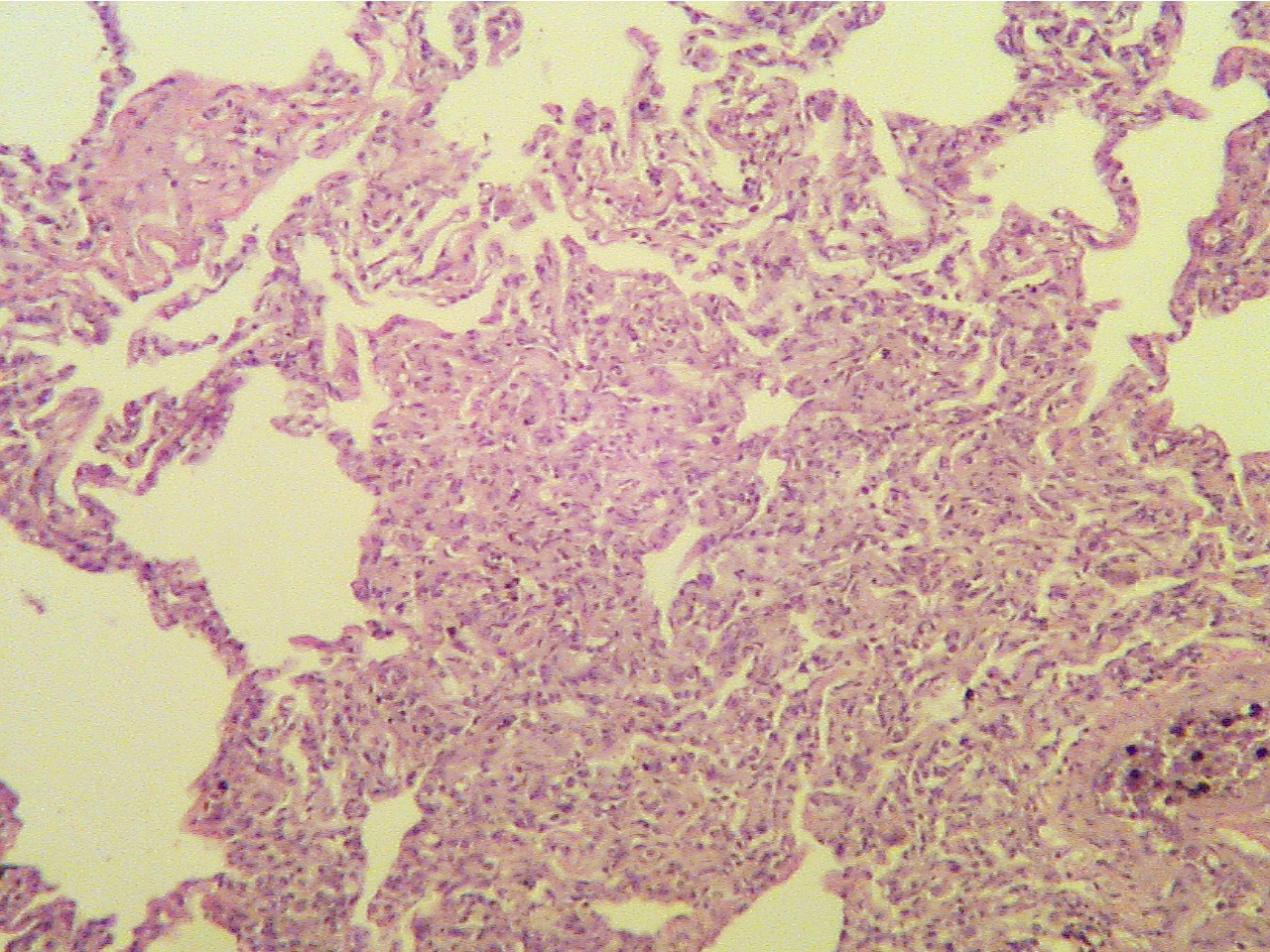
Cytopathology -- the microscopic study and interpretation of individual cells -- is tricky business. Looking at the typical tissue sample under the microscope, one looks at patterns formed by large numbers of cells. It's like an aerial photograph: get the lay of the land from 20,000 feet. Looking at only a few cells, spread apart, is like trying to figure out a neighborhood by looking at only a couple of houses. In particular, cancer is most easily recognizable when a goodly swatch of tissue is presented and that "aerial view " is available. Pathologists drive us surgeons crazy in the operating room when we send a sample for intra-operative diagnosis, and they call back asking for more specimen. Damn, we say. The reason you got what you got is because I can't send any more. Can't you make the call? Nope, need more....

So it's not hard to imagine that if some pathologists are reluctant to make a call based on an actual chunk of tissue, even more would shy away from trying to diagnose based on a small sample obtained with a fine needle. Not Ernie. The man had a gift. Over the years, he actually managed to drag me along to the point where when we looked at slides together I could sometimes see what he saw. But never as clearly, or as confidently. And the other pathologists? Forget it!

At the risk of annoying those who already know, let me state that cancer cells are normal cells gone bad: something happens to a cell or cells to unbridle them, to allow them to reproduce more rapidly than necessary, to gain the ability to insinuate themselves into areas in which they don't belong. And in the process they take on appearances that differ from normal. There are characteristics of cancer cells that can be recognized in individual cells, without the need to see giant patterns. Part of the process is that cancer cells can vary quite wildly within a group: cells are way larger -- or smaller -- than normal: the nuclei are very large, take up differently the stains that are used to highlight them under the microscope. Still, sticking your neck out and unequivocally identifying a few cells as malignant is something many pathologists are reluctant to do.

I've said in previous posts that when I'd see a woman with a breast lump, I'd most often take a fine needle sample on the initial visit, and then hand carry it to the lab, sit down with the pathologist and look at the slides with him. When cancer was confirmed I'd call the woman back that day and get together with her at the end of my office hours. It was a great service; in addition to avoiding a prolonged time of misery for the woman as she waited to hear results, it avoided surgical biopsy, saving someone well over a thousand bucks in various costs. Problem is, Ernie was the only guy willing to make the call. Anyone else, I'd get "highly suspicious" as a diagnosis. And that really doesn't help a damn bit, because it means -- even when I was as sure as I could be based on all the evidence: physical exam, mammogram, even the way the needle felt as I passed it into the lump -- that I couldn't tell the woman it was cancer, and had to resort to an open biopsy. (Often, when Ernie came back from wherever he was -- another planet? -- I'd have him secretly look at the slides, just to know what he'd have called. And pretty much without exception, in those cases when it was clear to me, he'd call it cancer.) Nor was Ernie a cowboy: he'd call it only when he was damn sure. If he couldn't make it out as cancer, even when he was highly suspicious, he'd demur.

Just to muddy the waters, and to scare the hell out of everyone, there actually was one time Ernie wrongly diagnosed cancer. It was a sample I took from a young woman with a lump I was certain was innocent, a fibroadenoma; not wanting surgery, she chose the needle aspiration for confirmation that it was ok to leave it alone. The result was so surprising to me that I simply told her the sample was a little questionable and I recommended removing the lump, which I did as a simple ten-minute office procedure, for not a whole lot of money. The report was fibroadenoma. No harm, no foul. No explanation, either.

Once again, I've ambled slowly to the point: variation in the skills and talents of doctors lead to variations in outcome, especially in the area of costs. It takes a pretty bad doctor regularly to affect ultimate outcome: the body is amazingly forgiving, and will heal in the face of wide variation from the Platonic ideal of a given operation, for example. If a bigger incision than necessary is made, if the wound edges are pulled on harder than ideal, you might hurt a little more and a little longer, but you'll be fine. If the operation took substantially longer than it might have in other hands, it'll cost more in OR charges, maybe take a little longer to shake it off, but you'll not know the difference in a while. But that stuff adds up. Would that I could deal only with Ernies. How I'd like not to have certain radiologists read my mammograms -- the ones who always have to say "can't rule out...." and "stereotactic biopsy recommended" [even when the lump is big as a house!] Of COURSE you can't rule it out!!!! No mammogram can absolutely exclude that cancer is present. But can't you give a report with the aim of helping, as opposed to covering your ass???

In an ideal world, guys like Ernie would teach the other pathologists his secrets, and they'd develop the skill and confidence to make the calls he's able to make. Radiologists would become able to say what they see and don't see in ways that streamline rather than complicate care. Anesthesiologists would help each other to gain the ability to have every patient off to sleep within moments of arriving in the OR, staying fully asleep during the operation (Note, once again: moving around during surgery is not a rememberable event for the patient; it just makes it a little harder for the surgeon) and fully awake right at the end of the case. And, of course, every surgeon would make the right judgments about when to operate and when to not; and how to conduct the operation efficiently, cost-effectively and safely; and would see the patient often enough post-operatively in the hospital to see to it that recovery was fast and uneventful. It doesn't happen now, and it's unlikely that it ever will. Not unlike people, doctors vary in skill, knowledge, experience, and committment. In my opinion, analyzing the wide variations in care delivery and finding a way to lessen them would be much more useful in controlling costs than the blood/turnip approach to date. And, assuming such analysis were possible in both meaningful and non-punitive ways (as you'd expect of our government, currently the approaches are nothing but punitive), it would be FAR more useful than the silly and simplistic and generally annoying "performance" measurements being instituted currently. But the complexities are daunting. Not only are the sheer numbers overwhelming, getting doctors to open their practices to such analysis, to look open-mindedly at the results, and to be willing to share their aptitudes with others is a pipe-dream. As is the ability of any agency I know of or could imagine to come up with a workable plan to try. Nor am I so sure I'd be willing, despite having shot off my mouth about it: if for no other reason that I don't trust any bureaucrat with the responsibility.

The good news, as I think I've implied, is that for most patients none of this matters to a really critical degree. Good enough, as I said in my book, is good enough. Most of the time. As it's impossible to imagine that every plumber you might randomly call will do a perfect job, so it's a fact that you can't expect that all doctors are equally perfect or even strive to be. It's just that healthcare is such a high-impact field and costs so damn much. As a guy getting older and approaching the time when I may need a surgeon, or a cardiologist (or a thanatologist) I'd like to think I could roll the dice and come up sevens. But I don't like the trends I'm seeing.

Sampler

Moving this post to the head of the list, I present a recently expanded sampling of what this blog has been about. Occasional rant aside, i...