Showing posts with label small bowel obstruction. Show all posts

Sunday, November 18, 2007

Snakes On A Pan


A very nice lady (and, one infers, an excellent doctor) who sutures for a living asked me a question which reminded me of a good story.

Rarely seen nowadays, there was a time when super-long intestinal tubes were used to treat certain conditions of the bowel; particularly in a person with many prior obstructions in whom reöperation was undesirable. Snoogled through the nose and into the stomach, these tubes had bags of mercury on the end (for its heaviness and loogilability, allowing passage) and were fifteen feet or more (guessing) long. The idea was that once in the stomach, the muscular action of the gut (peristalsis) would drag the bag and the tube downstream to the point of obstruction, decompressing it by sucking out the backed-up juices, and allowing unkinking; maybe by eventually working its way past the blockage. Sometimes it actually worked.

Having passed the tube, often over regurgitive objections, and having had the patient lie for hours on his/her right side so the bag would drop into the duodenum (which heads to the right out of the stomach), it would occasionally occur that the tube -- draped in some way by the bed and hung to allow unravelling -- would take on a life of its own and begin disappearing into the person in question, slower than but not unlike a baited line that had been glugged by a fish. (After many years of use, studies were done which showed no difference in non-operative success using these tubes as opposed to the much more hassle-free ones that just went into the stomach. Which is why you don't see them much any more, except in museums.)

It's one of those stories you hear: not actually witnessed, but told by unimpeachable sources. I think it happened where I trained, when I was there. A woman had been treated with such a tube, and it had passed as hoped. She seemed to be improving: belly decompressing, cramps gone. But suddenly one day things took a turn. Her urine output dropped and the amount of drainage from the tube began to climb -- signs of recurrent obstruction. With diminished urine output, it could mean even more dire things. IV fluids were increased, labs were checked, and on paper at least things didn't seem scary. But the upped drainage and downed urination continued, flummoxing her caregivers and frustrating the patient. Until observation solved the mystery.

The long tube had passed through the lady's entire intestinal tract, and was hanging out her rectum. When she sat on a bedpan to pee, it sucked the urine up and away, draining into the bucket for collecting intestinal juices, turning her fluid accounting upside down.

Let's ignore a couple of obvious questions and just agree: it's a great story.

Saturday, March 10, 2007

Twist and Shout


The more senior of my two partners when I first went into practice was old school in the very best sense of the words. The most general of general surgeons, he still did the occasional orthopedic procedure, yanked out uteri (indeed, that operation is more of a "yank," in terms of non-anatomic dissection, than most), didn't mind drilling a burr-hole or two if called upon to do it. I'm sure he'd have been happy to deliver a baby on the proverbial kitchen table; in fact, I think he did, back a ways. Many of his patients were people for whom he provided complete care as their family doctor. Blood pressure, diabetes, pneumonia -- he managed them all. And well, far as I could see. Gentle and soft-spoken, self-deprecating, Hume was welcoming to me from the start, and set an admirable example. When he assisted me, or I him, I always learned something. And, I'm happy to say, I showed him a few things as well. If it was mutual admiration, it was lop-sided in the way of a cub and a poppa bear.

He practiced mostly in the time when doctors were nothing but highly respected, and, at least in his case, it was entirely deserved. In his forty or so years of practice, he was never sued. Here's how it was in his heyday, as he told me once: a long-time patient, on whom he'd done a colon resection several years earlier, came to see him with abdominal pain. As was standard in the days before ultrasound, Hume ordered a gallbladder Xray, which made the expected diagnosis of gallstones. "George," he told the man, "looks like you'll need your gallbladder out. And while we're in there, I'm going to remove a clamp that I seem to have left in you last time." "Sure thing, doc. Whatever you say." (Snide-comment-avoiding explication: far as I recall, it was the stones that were the problem.)

One of my favorite tricks of patient care, for which I loved to write the order because I knew it boggled some nurses and about which I was never certain it worked but wrote it anyway because it made intuitive sense even if it seemed silly so it was fun to talk my patients into it and to imagine them doing it, having had a few people get better after doing it whether they would have or not had they not done it, and which in part I ordered because it always reminded me of Hume and made me feel like a canny old-timer who had a couple of decidedly low-tech tricks up his sleeve even when I was young but kept ordering when I was old, frequently enough that the nurses referred to it as the "Schwab shake" because it was in a different town and none of them knew Hume, was a thing he taught me. (Chew on that sentence, Strunk and White!) To see any sense in it at all, you have to be able to imagine the intestine in the midst of a small bowel obstruction.

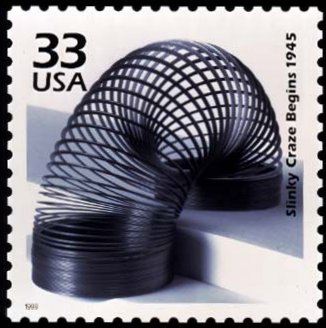
In the virgin abdomen (but not always in the abdomen of a virgin), the small intestine is free to slip and slither pretty much anywhere it wants. (In some operations, it's useful to "eviscerate" the patient by pulling the intestine as far as it will go outside of the abdominal cavity. Re-inserting them, those guts roll back in like a gang of slurpy slinkys over a soft stair, like the buttered spaghetti Momma dolloped onto your plate.) In an area of inflammation from an operation, or injury, or infections of one or another sort, a bit of intestine might become adherent to the abdominal wall or to other structures.Those areas are what we call "adhesions." If other areas remain normally slippery, it's not hard to imagine a loop or two of bowel sliding around a more fixed one, and causing a twist. And there you have it: small bowel obstruction. Typically, that means a distended abdomen as the upstream intestine fills with digestive juices, cramps as the muscular action of the gut ("peristalsis") tries to push stuff past the blockage, cessation of bowel movement or gas passage, and, most often, vomiting. In some instances, the blockage isn't complete, and there might be some amounts of stool. Diarrhea, even.

Surgery is usually the treatment for complete obstruction, and typically needs to be done within several hours, lest the twisted area die from lack of circulation (maybe I'll get into some of the subtleties in the future.) Non-surgical treatment consists of "suck and drip." Namely, a tube into the stomach to suction away the juices that are backing up, and IV fluids to replace the losses. If the patient is able, walking around is thought to be helpful, if for no other reason than to prevent secondary problems related to bed rest. But there the patient is, lying nearly continuously on her/his back, with a belly full of fat swollen intestines. If what you're hoping for is a serendipitous untwisting, lying like that with a bunch of sausage stacked on itself seems less than propitious. Thus, Hume's trick: get the patient out of bed, have him/her lean forward onto the bed, back as parallel to the ground as possible, and shake their hind end like kyphotic hula dancer. (I always demonstrated for my patients, which was generally found to be amusing.) Get them guts off of each other and move 'em around. I like it. (If the idea is sound, I thought, somersaults would be ideal. In fact, one of my friends -- a pediatrician, for whatever it's worth -- had a problem with recurring obstructions after splenectomy many years earlier. I suggested somersaults, which he starting doing at home at the first hint of symptoms, and he claims it helped. Eventually, however, I operated and fixed him for good.)

I never did a study; hard to imagine one ever being done. Several -- not all -- patients recovered without an operation after shaking it up. It's known, of course, that some obstructions resolve without surgery, so I can't claim to know whether the maneuver works or not. But all of my patients who could, did it. Whereas the long-term nurses on the surgical floor got used to the idea, I assume there were some -- especially those on the medical floors where such patients occasionally found themselves -- who thought I was nuts. Until their patients started pooping. And there's this: I was once consulted on a patient with a bowel obstruction in whom, on bedside abdominal exam, I could easily feel a particularly fat loop of bowel. What the heck, I thought: I manipulated it upward (it was remarkably easy to do) and around in some way, immediately after which the patient excused herself rapidly from my ministrations and headed to the bathroom where she produced ample evidence that the obstruction was no longer. I think Hume would have liked it.

Wednesday, July 26, 2006

Memorable patients: part two

"Musta been the ham sandwich," he said as he leaned onto the operating table and belched a couple of times. We were half-way through a thyroid operation and Doug, my partner, didn't look all that good. I'd been in practice for all of a year, and Doug, ten years my senior, was my guardian angel, my guide through the vagaries of the world of private practice, and the best surgeon I'd ever seen. Suddenly, he was definitely off his game.

We managed to get through the operation. Doug had an appendectomy teed up to follow, but instead of showing up to get it going, he'd gone to the ER, from which I got a call telling me Doug was down there being evaluated, and requesting that I do his case. Introducing myself to the patient, explaining the strange situation, convincing the man that this shiny-faced kid (a 33 year-old kid, but still...) was a satisfactory stand-in, I had more on my mind than the operation at hand. But the patient was fine with it, and I finished removing the appendix in time to take another ER call: Doug needed a surgical consult, and was requesting me.

Stone-faced, stiffly trying not to writhe, Doug was clearly in a lot of pain. Xrays didn't show much. Lab work showed a very mild elevation of amylase, a digestive enzyme produced mostly in the pancreas (and salivary glands); high levels most often signal pancreatitis. Alcoholism and gallstones are by far the most common causes of pancreatitis, and Doug wasn't a victim of either. His abdomen was pretty tender in the upper portion, which is where pancreatitis pain usually shows, but it wasn't rigid (as you know from the previous post, rigid ain't good.) For now, I'm thinking it's his pancreas, for one of the less common causes. I didn't think operation was indicated, and admitted him to the floor. Before that, Doug said to me, "Look, I know it's not easy taking care of a partner, and if you want to get someone else, I'll understand. But there's no one I'd rather have care for me than you." That's the thing: Doug and I had an amazing relationship: in the OR we clicked like we'd been doing it forever. I loved him as an assistant; he loved me. We were perfect together.

Proudly referring to himself as a "closet hick," Doug usually wore jeans, had a few acres, occasionally skipped town to buy a cow. He was tall and thin, taciturn, had an Adam's apple from which you could make an entire pie. Mostly serious, he had an occasional but fine sense of humor, was very respectful of and engaged with his patients, but less than empathetic: tough it out, he seemed to say. Now he was trying to do it himself.

Over the next few hours, Doug's pain persisted. He threw up a couple of times, so I put in a stomach tube (did it myself). Amylase levels remained only slightly up, repeat films remained non-specific, but his white blood cell count was rising. Having no clear idea what was going on, I called another surgeon for moral support, and scheduled surgery.

Closed loop bowel obstruction has a typical xray appearance; but if the case were typical, it wouldn't be memorable, now, would it? I opened Doug up and found about an twelve-inch segment of small intestine twisted around a single band-like adhesion (cf: previous post). Adhesions by far most commonly occur as a result of prior operations; they're rare in virgin abdomens, like Doug's. They can be congenital, result from a prior infection, or who the hell knows? Doug had one, and only one, and it killed a piece of bowel -- or close enough to make me afraid to leave it in. It took one quick snip to release the adhesion, but the bowel remained pretty black and motionless, so I cut it out and sewed the ends together. Piece of cake, routine stuff.

When doing his own operations, Doug had a thing about closing the mesentery after bowel resection. He sewed up both sides, instead of just one. Sewing it prevents a hole through which other intestine could slip, causing obstruction. Sewing both sides cuts down on the raw surface to which bowel could adhere, or so Doug believed. Nevertheless, most surgeons, myself included, don't take the time and don't think it makes much difference because the surface heals to smooth pretty fast. But I figured Doug'd be pleased; so I did both sides, and used his favorite suture, the old-fashioned "chromic" suture" (click the link and check out the contraindications) instead of the newer style I liked.

Doug woke up with a smile on his face. "You cured me," he said. His pain was gone; tough as nails, he was walking around, impatient to get the hell out of there, within hours. Until he started to vomit a couple of days later.

For brevity let me just say it was hell on earth. I was miserable: Doug wasn't getting better, I didn't know why, and the other surgeons in town hardly wanted to look at me in the doctors' lounge. They knew what I was going through; and if any of them was too dense to know, I was broadcasting it at 50,000 watts with every bone and muscle of my body. I couldn't sleep. I couldn't think. I got second opinions. Then Doug started to go nuts.

It's not all that rare: the combined effects of altered sleep, drugs, whatever, mean a certain number of patients will develop postop psychosis. Unlike some who go really crazy (it always clears up, by the way), Doug was just mildly paranoid. He started coming up with bizarre diagnoses, eventually became convinced he had horrible infection inside, and began to accuse me of deliberately withholding reoperation. Miserable ain't the half of it.

Early postop bowel obstruction happens sometimes, and it's one of the situations (cf: previous post) in which there's good reason not to reoperate very soon: more often than not, it clears on its own. I hung in there as long as I could stand to, with Doug getting more and more dour and accusatory, and finally I decided to re-operate. The surgeon I asked to assist didn't agree, but I thought I was right, for psychological as well as physical reasons.

Doug, it turns out, is allergic as hell to chromic suture. No reason for him to have known, since he only handled it with rubber gloves. Everywhere I'd placed it, in his honor, he'd reacted by swelling and hardening the tissues containing it. His bowel anastomosis had been puckered into a tight kink, in a way I'd never seen before, nor have since. "Well," the assistant said, "I guess you were right. This never would have opened up." So I re-did it, with my kind of suture. And before he woke up, because I feared he might not be able to eat for several more days, I inserted a special IV catheter into a vein below Doug's collar bone, to allow high-calorie intravenous feedings.

It took a few more days, during which I was pretty much a total wreck. But Doug started eating, doing well. One night I removed the IV, planning discharge for the next morning. "OK, Doug, looks like we made it," I said that morning, feeling elated in ways not felt for seemingly eons. And there it was: his right arm was swollen like a dead pig. Blood clot in the subclavian (below the clavicle) vein, no doubt from the IV I'd inserted.

Sometimes it's hard as hell, placing a subclavian IV: poking in and out, hitting the artery, causing bruising and pain. Doug's had gone in easily, first shot, like driving a scooter into a tunnel. So which is it, I thought? Push Doug out the window, or jump myself? Now he needed anticoagulation (not entirely clear, but majority position says so); of course, as a result he'd bleed somewhere, probably into his head. Or get a post-phlebitic syndrome-- uncommon as hell in the arm -- never operate again. Somebody kill me, please. Insurance doesn't cover suicide.

Well, he got better. No arm problems, no bowel problems. He brought me a bottle of wine or something one day; we never talked about his accusations. I did ask him if he thought the experience would change his attitude toward patients with problems. "Nope," he said. "Let's get to work."

Sampler

Moving this post to the head of the list, I present a recently expanded sampling of what this blog has been about. Occasional rant aside, i...