Before there was hospice, there were house calls. As ought to be obvious, I'm old enough that I've practiced surgery through many changes. Early on, when I could, I had to be my own hospice, sort of. Having observed families dealing with death, both in my practice and in my personal life, I came to believe that there was great benefit from keeping a patient at home as long as possible, even to the end. As exhausting and draining as it often is, the family members who did it seemed to gain a palpable measure of comfort themselves, a deep sense of... satisfaction. (Can we agree forever to ban the word "closure?" What a load of new-age crap that is! In the death of a loved one, there's no such thing. Acceptance, finding a way to live with it: yes. But closure, like it's over, like going through a door and shutting it behind? Please. )
I realize it's a tricky subject: not everyone is able -- for a huge number of absolutely important reasons -- to manage it; nor would I want to imply here, or to have created then, a sense of shame in those who couldn't. What I did was to offer as much help as possible, such as arranging all the needed equipment, a visiting nurse, and (less often than I'd have liked, but as often as I could manage) to visit myself. Irregularly, briefly, when I could; when they didn't live too far away. When I visited, I got as much (more!) out of it as did the patient and family. Sometimes I'd notice something that could be changed for the better. Usually, though, it was just a matter of saying hello, of holding a hand, smiling and touching. And of being impressed at how people managed. More often than not, it was a small house, sparsely furnished, a living-room dominated by a hospital bed and commode. The center of everything, quite literally.
The mechanical stuff -- beds, commodes, assist devices -- was just stuff. It was the idea of the actual moment of death and its aftermath that was the biggest hurdle to overcome in encouraging home care. People needed to know two things: if it got to be too much, all they had to do was call and I'd admit the patient. Some did, some didn't. And they were reassured to know that they could contact a funeral home in advance, and could call them to take the person whenever they were ready. It's a brave undertaking (!). Among the most cherished notes I got from patients and families are those thanking me for encouraging and helping with death at home. More than a gift to the loved one, it's a gift to oneself. With hospice, of course, it's a much more comprehensive program, giving much better support than I ever did, and taking care of all of the details. Thankfully, hospice came to our community around the time I was busy enough that it was harder and harder for me to take the time.
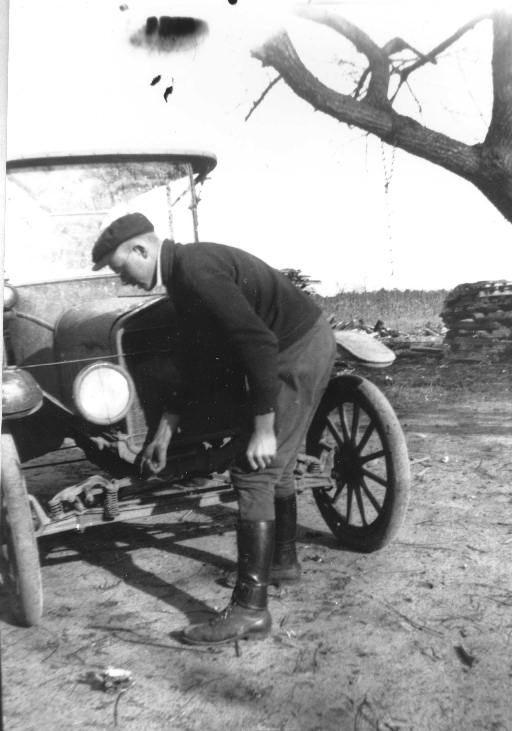
When I decided on med school, I had no idea I'd end up as a surgeon. Good 'ol Doc Schwab, driving his Model T to the homestead, feeling pulses, shaking down thermometers, and delivering the occasional baby on the kitchen table, was how I imagined it. The closest I ever came was making those house calls to the dying. Like the days of old, there wasn't much I could do -- check a bandage, lay my hand on a belly (one in which I'd usually been, earlier) for no particular reason other than a sense of connection to it, write the occasional prescription. Sometimes trying to answer the question, "How much longer, doctor?" But in being there, just being there, I felt more like a true physician than at any time I can think of. Even in failing to cure, there's never nothing to do. I wish there were more time to do it.